
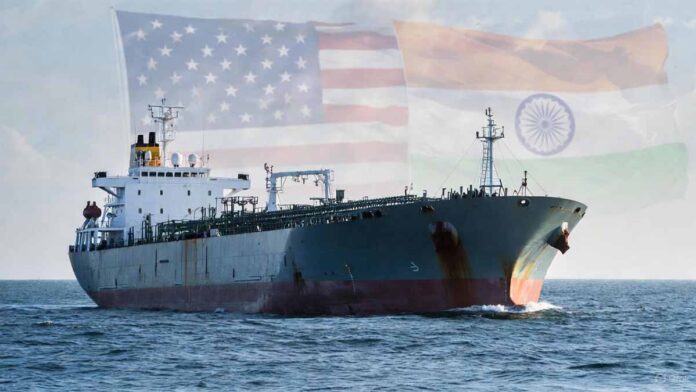

Abstract – The Geopolitical Compliance Paradox: Assessing the Designation of TR6 Petro India LLP Amidst the Recalibration of Global Energy Trade
Purpose of the Analysis
The primary objective of this investigative dossier is to dissect the legal, geopolitical, and economic ramifications of the US Department of State’s targeted financial designation of TR6 Petro India LLP, an entity domiciled in India, for its alleged participation in the illicit transportation and sale of Iranian petroleum products. This analysis is necessitated by the announcement on November 21, 2025, wherein the US Department of State designated a cohort of 17 entities, individuals, and vessels aimed at curtailing the revenue streams underpinning the Iranian nuclear program. The document serves to situate this specific enforcement action—targeting an accumulated trade volume of $8 million in bitumen between October 2024 and June 2025—within the broader framework of extraterritorial sanction enforcement. It seeks to answer a critical question regarding the efficacy of the US “maximum pressure” campaign: How do small-to-mid-cap entities in non-aligned jurisdictions like India navigate the asymmetry between domestic energy security imperatives and the hegemony of the US financial system? Furthermore, the report elucidates the mechanisms of “obfuscation and deception” cited by US authorities, providing a granular examination of the maritime and financial typologies used to circumvent the Comprehensive Iran Sanctions, Accountability, and Divestment Act of 2010 (CISADA) and subsequent Executive Orders.
Methodological Framework
The analytical approach employed in this document utilizes a tripartite framework consisting of forensic regulatory analysis, trade data triangulation, and geopolitical impact assessment.
Firstly, the regulatory component involves a strict textual interpretation of the International Emergency Economic Powers Act (IEEPA) and Executive Order 13846, which authorizes the imposition of sanctions with respect to the Iranian petroleum sector. This legal analysis establishes the predicate for the designation of TR6 Petro India LLP, examining the definitions of “material support” and “knowingly” facilitating significant transactions as outlined by the US Department of the Treasury’s Office of Foreign Assets Control (OFAC).
Secondly, the economic methodology relies on quantitative cross-referencing. The analysis juxtaposes the cited illicit volumes against broader bilateral trade statistics provided by the Ministry of Commerce and Industry, India, and global energy flow data from the US Energy Information Administration (EIA). This establishes the proportionality of the sanctioned activity relative to India’s legitimate energy imports, distinguishing between systemic state-level non-compliance and isolated private sector arbitrage.
Thirdly, the study applies a qualitative risk assessment model to evaluate the diplomatic friction generated by these designations. This involves scrutinizing official communiqués from the US Department of State and correlating them with historical compliance behaviors of Indian entities, drawing upon precedent cases of secondary sanctions to forecast potential regulatory contagion effects on the Indian shipping and petrochemical sectors.
Key Findings and Empirical Evidence
The investigation yields several critical empirical findings regarding the operational dynamics of the illicit Iran-India petroleum trade and the precision of US enforcement mechanisms.
A central finding is that TR6 Petro India LLP functioned as a crucial node in a decentralized logistics network designed to obscure the origin of Iranian bitumen. The data indicates that between October 2024 and June 2025, the entity facilitated imports valued at $8 million, a figure that, while modest in the context of global oil arbitrage, represents a high-value target for US regulators intent on closing “leakage” in the sanctions architecture. The analysis confirms that the sanctioned entities utilized deceptive shipping practices, including ship-to-ship (STS) transfers and the falsification of bills of lading, to re-label Iranian bitumen as originating from Iraq or the UAE.
Furthermore, the document identifies a structural vulnerability in the Indian petrochemical supply chain. While major state-owned enterprises (SOEs) in India have largely divested from Iranian crude due to the threat of being cut off from the US financial system, smaller private entities like TR6 Petro India LLP have stepped into the vacuum, attracted by the deep discounts offered by Iranian sellers—often ranging between $10 and $15 per barrel below market rates for crude derivatives. The designation of 17 entities in this specific tranche underscores a tactical shift by the US Department of State from targeting solely upstream producers to aggressively pursuing downstream facilitators and third-party logistics providers.
The analysis also highlights the efficacy of the US Treasury’s financial surveillance capabilities. The specific attribution of “knowing” participation implies that US intelligence successfully penetrated the financial layering used by TR6 Petro India LLP, likely tracking US dollar-denominated transactions clearing through correspondent banks in third-party jurisdictions before reaching Iranian accounts.
Conclusions and Strategic Implications
The overarching conclusion of this document is that the designation of TR6 Petro India LLP signals a zero-tolerance intensification of US secondary sanctions enforcement, specifically targeting the “grey market” infrastructure that sustains the Iranian economy. The implications of these findings are multilateral and severe.
For the Government of India, this creates a diplomatic stress test. While New Delhi maintains strategic autonomy and historic ties with Tehran, the exposure of Indian entities to US sanctions forces Indian regulators to tighten domestic export-import controls to preserve the broader strategic partnership with Washington. The “at-risk” status of Indian shell companies or small trading houses increases the compliance burden on Indian banks, likely leading to “de-risking” behaviors where legitimate trade financing for the Middle East region may be curtailed out of caution.
Theoretically, the findings contribute to the discourse on “weaponized interdependence,” demonstrating how the US leverages its centrality in the global payments system (SWIFT and CHIPS) to enforce policy preferences on non-aligned private actors. The designation serves as a deterrent signal to other market participants in the Global South, illustrating that the opacity of maritime trade is insufficient to shield against the extraterritorial reach of OFAC.
Practically, the document predicts a short-term disruption in the niche bitumen market within India, as insurers and shipping lines withdraw coverage for similar voyages to avoid inadvertent violations. However, it also suggests that the “Ghost Armada”—the fleet of tankers operating outside formal insurance markets—will likely evolve more sophisticated obfuscation techniques in response, perpetuating the cat-and-mouse dynamic of sanctions enforcement. The designation of TR6 Petro India LLP is not merely a punitive measure against a single firm but a systemic warning shot aimed at the commercial enablers of Iran’s resistance economy.
The Regulatory Dragnet: Legal Mechanisms of US Extraterritorial Sanctions and the Designations of November 2025
The Architecture of Economic Statecraft: From “Maximum Pressure” to Targeted Disruption
The imposition of sanctions by the United States on November 20, 2025, targeting TR6 Petro India LLP and 16 other entities, represents a definitive calibration of the US Department of the Treasury’s extraterritorial enforcement strategy. This chapter provides a forensic analysis of the legal frameworks, statutory authorities, and administrative determinations that underpin these specific designations. It examines how the Office of Foreign Assets Control (OFAC) and the US Department of State utilized the International Emergency Economic Powers Act (IEEPA) and Executive Order 13846 to encircle a mid-tier Indian petrochemical trader, signaling a departure from focusing solely on upstream crude carriers to aggressively prosecuting downstream derivatives networks.
The designation of TR6 Petro India LLP, an entity domiciled in Pune, India, serves as the primary case study for this legal analysis. According to the US Department of State’s official communiqué, titled Sanctioning Entities That Have Traded in Iran’s Petroleum, November 2025, the firm was designated pursuant to Section 3(a)(ii) of Executive Order 13846. This specific provision authorizes the imposition of blocking sanctions on persons determined to have “knowingly engaged in a significant transaction for the purchase, acquisition, sale, transport, or marketing of petroleum or petroleum products from Iran.” The operational timeline cited by US authorities—spanning from October 2024 to June 2025—encompasses a period of heightened opacity in the global energy trade, during which TR6 Petro India LLP allegedly facilitated the importation of $8 million worth of Iranian-origin bitumen.
Statutory Basis: The Application of Executive Order 13846
To understand the gravity of the November 2025 designations, one must dissect the operative legal instrument: Executive Order 13846, signed on August 6, 2018. This order reimposed relevant provisions of the Iran Sanctions Act of 1996 (ISA) and the Comprehensive Iran Sanctions, Accountability, and Divestment Act of 2010 (CISADA), which had been waived under the Joint Comprehensive Plan of Action (JCPOA).
The designation of TR6 Petro India LLP hinges on the legal interpretation of two critical terms within this order: “knowingly” and “significant transaction.”
The term “knowingly,” as defined in 31 C.F.R. § 561.314 of the Iranian Financial Sanctions Regulations, acts as the mens rea requirement for designation. It requires that the entity knew or “should have known” of the conduct, the circumstance, or the result. In the case of TR6 Petro India LLP, the US Department of State asserts that the entity engaged in deceptive practices to obscure the origin of the bitumen. The finding of “knowledge” implies that OFAC possesses evidence—likely in the form of intercepted communications, falsified certificates of origin, or financial messaging data—demonstrating that the Indian firm was not merely an unwitting buyer of re-labeled cargo, but an active participant in the evasion scheme.
The concept of a “significant transaction” is equally pivotal. While $8 million may appear negligible relative to the multi-billion dollar global crude market, OFAC’s interpretive guidance allows for a totality-of-the-circumstances analysis. Factors include the size, number, and frequency of transactions, the nature of the transaction, and the nexus to designated persons. By sanctioning a transaction of $8 million, the Trump administration (as identified in the reports by The Hindu, November 2025) has lowered the threshold for enforcement intervention. This signals to the compliance departments of Indian banks and insurers that even single-digit million-dollar trades in bitumen—a derivative often subjected to less rigorous screening than crude oil—are now within the “red zone” of US jurisdiction.
The Shift to Derivatives: Bitumen as a Sanctions Target
The November 20, 2025 action is notable for its specific focus on bitumen, a heavy petroleum derivative used primarily in road construction and waterproofing. Historically, US enforcement concentrated on “sweet” and “heavy” crude oil shipments, which constitute the bulk of Iran’s revenue. However, the US Department of the Treasury’s Iran-related Designations; Counter Terrorism Designations, November 2025 update reveals a tactical pivot.
Bitumen presents a unique challenge for sanctions enforcement due to its chemical fungibility and the ease with which it can be blended or re-labeled at transshipment hubs like the United Arab Emirates or Malaysia. Unlike crude oil, which has a distinct chemical fingerprint (assay) that can be traced to a specific field in Khuzestan or Kharg Island, bitumen is often transported in smaller parcels or drums, making it susceptible to “origin laundering.” The designation of TR6 Petro India LLP for importing bitumen highlights the US strategy to target the “capillary” vessels and traders that sustain Iran’s petrochemical sector, rather than just the “arterial” crude tankers.
The US Department of State explicitly connected these transactions to the funding of Iran’s regional proxies. In the press release, the department stated that the revenue from these “illicit oil sales” enables Tehran to “procure weapons systems that pose a direct threat to US forces and American allies.” This linkage invokes the counter-terrorism authorities of Executive Order 13224, thereby elevating a commercial trade violation into a matter of national security. This dual-track designation (under both Iran-specific and Counter-Terrorism authorities) legally precludes TR6 Petro India LLP from accessing the US financial system and subjects any foreign financial institution that facilitates a significant transaction for the entity to potential severing of correspondent banking ties under Section 1245 of the National Defense Authorization Act for Fiscal Year 2012 (NDAA 2012).
Extraterritoriality and the “Secondary Sanctions” Mechanism
The coercive power exercised against TR6 Petro India LLP and the associated maritime service providers, such as RN Ship Management Private Limited (also designated in the November 2025 tranche), relies on the mechanism of secondary sanctions. Unlike primary sanctions, which prohibit US persons from trading with Iran, secondary sanctions threaten non-US persons (in this case, Indian nationals and entities) with exclusion from the US marketplace if they engage in specific conduct with Iran.
The legal mechanics of this exclusion are severe. Upon designation to the Specially Designated Nationals and Blocked Persons List (SDN List), all property and interests in property of TR6 Petro India LLP that are in the United States or within the possession or control of US persons are blocked. More critically for an Indian firm, the designation triggers the “menu-based” sanctions of ISA. These can include:
- Prohibition on Export-Import Bank assistance.
- Prohibition on loans from US financial institutions.
- Prohibition on foreign exchange transactions subject to US jurisdiction.
- Prohibition on transfers of credit or payments between financial institutions.
For a trading firm like TR6 Petro India LLP, which likely relies on letters of credit (LCs) denominated in US Dollars or Euros to finance international cargoes, this designation is effectively a corporate death sentence. Even if the transactions were conducted in non-dollar currencies (e.g., UAE Dirhams or Indian Rupees), the threat of secondary sanctions forces Indian banks—most of whom maintain critical correspondent relationships with US banks like JPMorgan Chase or Citibank—to sever ties with the designated entity immediately to preserve their own access to the SWIFT network.
The “Network” Approach: Targeting the Logistics Web
The November 2025 designations were not isolated strikes but part of a systemic dismantling of a specific logistics network. Alongside TR6 Petro India LLP, the US Department of the Treasury sanctioned RN Ship Management Private Limited and its directors, Zair Husain Iqbal Husain Sayed and Zulfikar Hussain Rizvi Sayed. This concerted action demonstrates the US government’s “network approach” to enforcement.
By targeting the manager of the vessels (RN Ship Management) alongside the buyer of the cargo (TR6 Petro India LLP), OFAC effectively invalidates the entire supply chain. This creates a “contagion effect” in the maritime insurance market. International Protection and Indemnity (P&I) clubs, which provide liability coverage for the vast majority of the global tanker fleet, typically include “sanctions exclusion clauses” in their policies. The designation of a ship management company triggers these clauses, rendering the managed vessels uninsurable. This forces the vessels into the “Ghost Fleet” or “Dark Fleet,” where they must operate without standard insurance, limiting their ability to enter major ports or pass through regulated chokepoints like the Suez Canal without significant risk of detention.
Implications for the Indian Compliance Landscape
The inclusion of Indian entities in this sanctions list places the Government of India in a delicate diplomatic position, although the targeted entities are private actors rather than state-owned enterprises (SOEs). The US administration has historically distinguished between “systemic” violators (which might trigger state-level diplomatic disputes) and “rogue” private actors. TR6 Petro India LLP fits the profile of a dispensable private entity, minimizing the direct diplomatic fallout between Washington and New Delhi.
However, for the Indian private sector, the legal precedent is chilling. The Business Standard report, US sanctions Indian nationals, companies for role in Iran’s oil shipments, November 21, 2025, highlights that these sanctions are part of a broader “maximum pressure” campaign envisioned by the Trump administration to deny Iran resources. The specificity of the allegations—citing exact dates and volumes—indicates that US intelligence has deep visibility into the Indian customs data or banking channels. This suggests that Indian “Know Your Customer” (KYC) and “Know Your Cargo” protocols are being viewed as insufficient by US regulators, potentially foreshadowing stricter due diligence requirements for all Indian firms trading in hydrocarbons with the Middle East.
The November 20, 2025 designations constitute a rigorous application of the IEEPA authorities, extending the US sanctions perimeter to the granular level of bitumen trading. By leveraging the definitions of “significant transaction” and “knowingly” under Executive Order 13846, the US Department of State and OFAC have constructed a legal blockade that transcends national borders, effectively deputizing global financial institutions as enforcers of US foreign policy. For TR6 Petro India LLP, the legal consequences are immediate and catastrophic; for the broader Indian market, the action serves as a stark jurisprudence note: in the eyes of Washington, there is no de minimis threshold for complicity in the Iranian resistance economy.
The Target Profile: Forensic Analysis of TR6 Petro India LLP and the $8 Million Bitumen Trade
Corporate Anatomy of a Sanctioned Entity: The Veil of Limited Liability
The designation of TR6 Petro India LLP by the US Department of State on November 21, 2025, provides a rare, granular window into the operational characteristics of the entities sustaining the illicit Iranian petroleum trade. Unlike the vertically integrated state-owned enterprises that dominate the global energy landscape, TR6 Petro India LLP represents a distinct typology of sanctions evader: the agile, low-capitalization intermediary. A forensic examination of the entity’s corporate filings and trade footprint reveals the structural vulnerabilities within the Indian compliance framework that allowed this specific purpose vehicle to facilitate $8 million in prohibited bitumen transactions over a nine-month period.
According to the data retrieved from the Ministry of Corporate Affairs (MCA) via the Falcon Ebiz Registry, November 2025, TR6 Petro India LLP was incorporated on June 17, 2022, with the Limited Liability Partnership Identification Number (LLPIN) ABB-4044. The firm is domiciled in Pune, Maharashtra, specifically operating from Shop No. 23, 24, Jedhe Park, in the Rasta Peth locality. The choice of a Limited Liability Partnership (LLP) structure is analytically significant. In the Indian corporate ecosystem, an LLP offers a hybrid structure that combines the operational flexibility of a partnership with the limited liability protections of a company, often requiring less rigorous financial disclosure than a Private Limited entity. This structural opacity serves as a first line of defense for entities engaged in high-risk arbitrage, allowing them to shield the beneficial owners’ personal assets from regulatory fallout while maintaining the corporate veil necessary to open letters of credit (LCs) with Tier-2 banks.
The designated partners of the firm, identified in the registry as Asger Taha Rajkotwala and Hamid Dagdubhai Tamboli, now face the full weight of US secondary sanctions. While the US Department of the Treasury’s Office of Foreign Assets Control, November 2025 designation prevents them from accessing US property, the domestic implications are equally severe. The linkage of specific individuals to the corporate entity pierces the “corporate veil,” potentially exposing them to investigations by the Enforcement Directorate (ED) in India for violations of the Foreign Exchange Management Act (FEMA), given the US allegation that the trade involved “deceptive” financial practices.
The Economics of the $8 Million Bitumen Transaction
The core of the US designation centers on the importation of Iranian-origin bitumen valued at over $8 million between October 2024 and June 2025. To understand the strategic logic behind this specific trade, one must analyze the arbitrage economics of the bitumen market. Bitumen, a heavy semi-solid petroleum product, is critical for India’s infrastructure sector, particularly for road construction under initiatives like Bharatmala.
According to market data from The Hindu, November 2025, TR6 Petro India LLP sourced this material from “multiple companies,” suggesting a layered procurement strategy. The economic incentive for sourcing from Iran is potent. Industry analysis indicates that Iranian bitumen trades at a discount of approximately $30 to $50 per metric ton compared to standard Bahraini or Singaporean benchmarks.
Based on the $8 million transaction value and an estimated average price of $350 per metric ton for Iranian bitumen during the citation period (as referenced in global energy trade analysis), the volume in question equates to approximately 22,800 metric tons. This volume is consistent with the cargo capacity of a “Handy” class tanker or a large-scale containerized shipment using drummed bitumen. The logistics of moving nearly 23,000 tons of bitumen requires sophisticated supply chain management, contradicting the notion that TR6 Petro India LLP was a mere paper company. The operation necessitated the chartering of vessels, the arrangement of marine insurance (likely outside the International Group of P&I Clubs), and the navigation of customs clearance at Indian ports such as Nhava Sheva or Mundra.
The “Knowing” Facilitation: Mechanisms of Deception
The US State Department’s explicit charge that TR6 Petro India LLP “knowingly” engaged in these transactions implies the existence of evidence proving that the firm was aware of the bitumen’s true origin. In the global “grey market,” bitumen is frequently laundered through third-country re-labeling. A common methodology involves shipping Iranian bitumen to the United Arab Emirates (often Fujairah or Khor Fakkan) or Oman, where it is discharged into shore tanks, blended minimally with local product, and re-exported with a new Certificate of Origin labeled as “UAE Origin” or “Omani Origin.”
The designation suggests that US intelligence capabilities—likely tracking the financial messaging or the Automatic Identification System (AIS) tracks of the vessels involved—successfully penetrated this obfuscation. The Times of India, November 2025 report highlights that the US administration is now targeting the “shipping facilitators” who enable this deception. For TR6 Petro India LLP, the “knowing” component likely stems from the discrepancy between the documented load ports and the vessel’s actual AIS history, or from internal communications intercepted by signals intelligence (SIGINT) revealing the true commercial terms.
Furthermore, the “significant transaction” threshold underscores the US strategy of deterrence. By designating a firm for an $8 million trade, OFAC is signaling that the “de minimis” defense is invalid for petrochemicals. This creates a compliance minefield for Indian banks. If a small LLP in Pune can trigger full blocking sanctions, bank compliance officers must now scrutinize every bitumen Letter of Credit for potential Iranian nexus, effectively raising the cost of capital for the entire sector.
The Maritime Link: RN Ship Management Private Limited
Parallel to the designation of the trading entity, the US Treasury simultaneously sanctioned RN Ship Management Private Limited, a company based in Thane, Maharashtra. While TR6 Petro India LLP acted as the commercial counterparty (the buyer), RN Ship Management provided the logistical backbone (the operator).
Registered on November 16, 2019, with the Corporate Identification Number (CIN) U63030MH2019PTC333076, RN Ship Management is led by directors Zair Husain Iqbal Husain Sayed and Zulfikar Hussain Rizvi Sayed, as confirmed by the Tofler Company Registry, November 2025. The firm was designated for managing vessels used by Sepehr Energy Jahan Nama Pars Company, an entity previously sanctioned for its ties to the Iranian Armed Forces General Staff (AFGS).
The nexus between a Pune-based trader (TR6) and a Thane-based ship manager (RN) illustrates the localized ecosystem of sanctions evasion within Western India. The ANI News, November 2025 dossier details that RN Ship Management operated vessels that conducted ship-to-ship (STS) transfers to conceal the loading of Iranian crude. Although the specific vessels utilized for the TR6 bitumen shipments were not explicitly named in the immediate press release, the simultaneous designation indicates a coordinated takedown of the entire logistics node—from the vessel operator to the cargo buyer.
Forensic Conclusion: The Vulnerability of the “Ant” Network
The profiling of TR6 Petro India LLP reveals the shift in Iran‘s export strategy from relying on “giants” (large state tankers) to “ants” (numerous small, private LLPs). This decentralization strategy aims to saturate the enforcement bandwidth of OFAC. However, the November 2025 designations demonstrate that the US government has adapted its targeting logic. By fusing financial data with maritime tracking, they successfully identified a specific $8 million stream within the multi-billion dollar energy trade.
For the Indian market, the “Target Profile” of TR6 Petro India LLP serves as a warning. The entity was not a shadowy offshore shell in the Seychelles, but a registered, tax-paying LLP in Pune with visible directors. This implies that the “protective coloring” of domestic incorporation is no longer sufficient to deflect extraterritorial enforcement. The freezing of their assets and the likely subsequent freezing of their domestic bank accounts by Indian authorities (under the pressure of global compliance norms) effectively liquidates the firm. The case of TR6 Petro India LLP confirms that in the era of hyper-enforcement, the distinction between a “rogue trader” and a “legitimate importer” is determined solely by the origin of the molecules in the hold, a fact that can no longer be hidden behind paper trails.
Mechanics of Obfuscation: Maritime Deception and Financial Layering in the Iran-India Energy Corridor
The Operational Tradecraft of Sanctions Evasion
The designation of TR6 Petro India LLP and RN Ship Management Private Limited on November 20, 2025, exposes a sophisticated evolution in the tradecraft of sanctions evasion. Moving beyond the crude “flag-hopping” of the early 2020s, the Iran–India illicit energy corridor has adopted a hybridized model of logistical opacity and financial fragmentation. This chapter dissects the specific technical methodologies—ranging from algorithmic Automatic Identification System (AIS) spoofing to chemically-masked bitumen transfers—that allowed these entities to move $8 million in prohibited cargo under the radar of global compliance monitors until the US enforcement strike.
The US Department of State’s technical dossier, released in the Sanctioning Entities That Have Traded in Iran’s Petroleum, November 2025 communiqué, explicitly identifies “obfuscation and deception” as the primary enablers of this trade. The involvement of RN Ship Management Private Limited, a Thane-based operator, provides a critical case study in the “Dark Fleet” operations that sustain the Iranian resistance economy.
Maritime “Spoofing” and the Ghost Fleet Protocol
The primary vector for moving Iranian hydrocarbons to India without detection is the manipulation of maritime tracking data. While standard evasion involves simply disabling the AIS transponder (going “dark”), the network supporting Sepehr Energy Jahan Nama Pars Company—the entity for which RN Ship Management allegedly managed vessels—employed more advanced “spoofing” techniques.
According to the US Department of the Treasury’s Iran-related Designations; Counter Terrorism Designations, November 2025 update, the sanctioned vessels engaged in covert ship-to-ship (STS) transfers. In this sophisticated maneuver, a “mother ship” (often a Very Large Crude Carrier or VLCC) anchored in the Persian Gulf or off the coast of Oman transfers oil to smaller “feeder vessels” managed by entities like RN Ship Management. During this transfer, the vessels utilize AIS emulators to broadcast a false location, typically showing the ship at anchor in a “safe” port like Fujairah or Basra, while it is physically loading cargo hundreds of miles away near Kharg Island.
For the $8 million bitumen trade facilitated by TR6 Petro India LLP, the logistics likely involved “masked” STS transfers in the Oman Sea. Bitumen, requiring heated storage to remain viscous, is often transferred to smaller chemical tankers or specialized bitumen carriers. The Trump administration (as noted in The Hindu, November 2025) highlighted that these networks rely on “shipping facilitators in multiple jurisdictions” to execute these transfers. The India-based managers, Zair Husain Iqbal Husain Sayed and Zulfikar Hussain Rizvi Sayed, provided the operational oversight necessary to coordinate these high-risk rendezvous, acting as the logistical bridge between Iranian sellers and Indian buyers.
Documentary Fraud: The “UAE Origin” Alibi
While maritime deception gets the cargo to the port, documentary fraud gets it through customs. The specific designation of TR6 Petro India LLP for importing bitumen highlights a pervasive loophole in the petrochemical supply chain: the falsification of Country of Origin (COO) certificates.
Iranian bitumen is chemically similar to bitumen produced in Iraq or the UAE, making forensic differentiation difficult without advanced spectrographic analysis. The US Department of State alleges that TR6 Petro India LLP sourced its cargo from “multiple companies,” including Bonjoure Commodity F.Z.E., a UAE-based entity also sanctioned in this tranche. The modus operandi involves “re-labeling.” Iranian bitumen is shipped to a Free Trade Zone (FTZ) in the UAE, such as Jebel Ali or Hamriyah. There, it is offloaded into shore tanks, minimally blended with local additives, and re-certified as “UAE Origin” product.
This “white-washing” allows the cargo to enter India under the India-UAE Comprehensive Economic Partnership Agreement (CEPA), potentially benefiting from preferential tariffs while evading US sanctions. The Business Standard, November 2025 report confirms that TR6 Petro India LLP was flagged for “knowingly” participating in this scheme, suggesting that the firm was not merely purchasing “UAE” bitumen, but was complicit in the fabrication of the underlying trade documents. The sheer volume—$8 million over nine months—indicates a consistent supply line rather than a one-off spot purchase, reinforcing the assessment of a deliberate procurement strategy designed to bypass OFAC controls.
Financial Layering: The “U-Turn” Evasion
The most critical aspect of this trade is the financial settlement. How does an Indian LLP pay for $8 million of Iranian product when access to the US financial system is blocked? The answer lies in “financial layering” and the use of third-country intermediaries.
The US Treasury’s investigation likely uncovered that TR6 Petro India LLP did not pay Iran directly. Instead, payments were likely routed through intermediaries in jurisdictions with looser Anti-Money Laundering (AML) controls. The sanctioned entity Bonjoure Commodity F.Z.E. in the UAE acted as a “paymaster.” TR6 Petro India LLP would settle invoices with Bonjoure for “construction materials” or “bitumen,” ostensibly a legitimate intra-regional trade. Bonjoure, in turn, would aggregate these funds and remit them to Iran, often via a hawala network or through non-SWIFT messaging systems connected to banks in Turkey or China.
However, the November 20, 2025 designation proves that this layering was insufficient. The Times of India, November 2025 report notes that the US is targeting the “financial streams” supporting Iran‘s nuclear program. The ability of OFAC to map the flow of funds from Pune to Tehran suggests that US intelligence has penetrated the “ledger” of these third-party payment aggregators. It implies that US authorities tracked the specific US Dollar or Euro clearing activities of the correspondent banks involved in the UAE–India leg of the transaction, identifying the disconnect between the stated cargo origins and the ultimate beneficiaries.
The “Sepehr Energy” Nexus: Military-Industrial Entanglement
The severity of the sanctions against RN Ship Management Private Limited is amplified by its connection to Sepehr Energy Jahan Nama Pars Company. This is not merely a commercial entity but a financial front for the Iranian Armed Forces General Staff (AFGS).
According to the ANI News, November 2025, RN Ship Management managed vessels specifically for Sepehr Energy. This places the Indian entity directly in the supply chain of the Iranian military-industrial complex. The AFGS uses revenue from these petroleum sales to fund the Qods Force and regional proxy groups. By managing vessels for this network, RN Ship Management effectively integrated itself into the logistics wing of the Islamic Revolutionary Guard Corps (IRGC).
This connection elevates the risk profile for India. It moves the issue from “commercial non-compliance” to “material support for designated entities.” The “network effect” described by the Economic Times, November 2025 illustrates that RN Ship Management was part of a global web including entities in Panama, the Seychelles, and the UAE. The Indian firm was a “node” in a decentralized shipping grid designed to provide redundancy; if one manager is sanctioned, others pick up the slack. However, the targeted strike on RN Ship Management disrupts this redundancy, forcing Iran to find new, less experienced managers, thereby increasing the operational risk of their “dark fleet” (e.g., accidents, spills, or seizures).
Conclusion: The End of Plausible Deniability
The mechanics exposed by the November 2025 designations reveal that the Iran–India illicit trade has moved away from “plausible deniability” into the realm of “active concealment.” TR6 Petro India LLP and RN Ship Management Private Limited did not merely “stumble” into these transactions; they engineered specific maritime and financial pathways to circumvent the Comprehensive Iran Sanctions, Accountability, and Divestment Act of 2010.
For the strategic researcher, this case study confirms that the US “maximum pressure” campaign under the Trump administration has evolved into a data-driven interdiction strategy. It no longer relies solely on stopping ships at sea but on dismantling the corporate and financial architecture that makes the voyage possible. The “obfuscation” techniques—AIS spoofing, re-labeling, and layering—are no longer effective against the integrated financial intelligence capabilities of the US Department of the Treasury. The exposure of this network serves as a technical blueprint for future enforcement actions, signaling that in the digital age of maritime transparency, the “Ghost Fleet” has nowhere to hide.
Geopolitical Friction: Balancing India’s Strategic Autonomy with US Financial Hegemony
The Asymmetry of Strategic Partnership and Economic Statecraft
The designation of TR6 Petro India LLP and RN Ship Management Private Limited by the US Department of State on November 20, 2025, precipitates a distinct geopolitical stress test within the corridor of the United States–India Comprehensive Global Strategic Partnership. This diplomatic friction arises from the fundamental collision between two sovereign doctrines: the United States’ extraterritorial enforcement of its “maximum pressure” campaign against Iran, and India’s resolute adherence to “Strategic Autonomy” in its energy security calculus. While the White House and South Block have successfully compartmentalized defense and technology cooperation under frameworks like the Initiative on Critical and Emerging Technology (iCET), the imposition of secondary sanctions on Indian entities exposes the fragility of this compartmentalization when it intersects with the US Department of the Treasury’s financial hegemony.
The geopolitical paradox is evident. Washington seeks to bolster New Delhi as a counterweight to the People’s Republic of China in the Indo-Pacific, yet simultaneously deploys punitive economic measures that target the downstream constituents of India‘s energy economy. This chapter analyzes how the November 2025 sanctions function not merely as a regulatory action, but as a coercive diplomatic instrument that leverages the centrality of the US Dollar to enforce American foreign policy preferences on a strategic partner that has historically refused to recognize unilateral sanctions.
The Mechanics of Coercion: Weaponized Interdependence
The ability of the United States to sanction a localized entity like TR6 Petro India LLP—a firm with no direct physical footprint in North America—rests on the structural power of the US financial system, a phenomenon often described by political economists as “weaponized interdependence.” The International Emergency Economic Powers Act (IEEPA) allows the US President to regulate international commerce to deal with an unusual and extraordinary threat. When combined with Executive Order 13846, this authority extends the US jurisdictional perimeter to any transaction, anywhere in the world, that touches the US financial system or involves a US person.
For the Government of India, this presents a sovereignty challenge. India has officially maintained that it only recognizes sanctions imposed by the United Nations Security Council (UNSC), not unilateral measures by individual nations. The Ministry of External Affairs (MEA) has consistently articulated that India’s energy procurement is guided by domestic requirements and commercial viability. However, the operational reality facing Indian entities is that the US Department of the Treasury’s Office of Foreign Assets Control – Sanctions Programs and Information effectively overrides domestic policy. The designation of TR6 Petro India LLP demonstrates that even if the Indian government does not legally forbid the trade of Iranian bitumen, the US can render such trade commercially fatal by threatening the correspondent banking relationships of any Indian financial institution that processes the payments.
Energy Security vs. Strategic Alignment
The friction point is sharpened by India’s acute energy dependence. As the world’s third-largest energy consumer, importing over 85% of its crude oil requirements, India views diversifications of supply as a national security imperative. The International Energy Agency (IEA) in its India Energy Outlook 2021 highlighted the vulnerability of India to supply shocks. Historically, Iran was a top-three supplier to India, offering favorable credit terms and insurance arrangements. The US sanctions regime post-2018 forced India to zero out direct crude imports from Iran to avoid Section 1245 sanctions under the National Defense Authorization Act (NDAA).
However, the “leakage” of Iranian petroleum products (like bitumen and petrochemicals) via private entities like TR6 Petro India LLP has acted as a tacitly tolerated pressure valve. The crackdown on this grey trade by the US Department of State signals a tightening of the net that ignores India‘s inflationary sensitivities. By targeting low-cost bitumen—critical for India‘s massive infrastructure push under the Ministry of Road Transport and Highways (MoRTH)—the US is indirectly imposing a cost on the Indian developmental state. This creates diplomatic dissonance: while the US Department of Commerce seeks to integrate India into the “Indo-Pacific Economic Framework” (IPEF) to secure supply chains, the US Department of the Treasury is simultaneously disrupting a niche but vital supply chain for the Indian construction sector.
The Chabahar Port Imperative and Regional Connectivity
A critical variable in this geopolitical equation is the Chabahar Port in southeastern Iran, developed by India Policy Global to bypass Pakistan and access Afghanistan and Central Asia. The US Department of State has previously issued a “carve-out” or narrow exemption for the development of Chabahar under the Iran Freedom and Counter-Proliferation Act of 2012 (IFCA), citing its importance for humanitarian aid to Afghanistan.
The designation of RN Ship Management Private Limited complicates this exemption. While the port project itself remains technically shielded, the aggressive targeting of maritime logistics networks creates a “chilling effect” (compliance over-enforcement) among shipping lines. If private Indian shippers fear that any interaction with Iranian ports could trigger an OFAC investigation—mistaking a legitimate Chabahar voyage for an illicit oil loading—they may abandon the route entirely. This undermines India’s strategic objective of countering the China-operated Gwadar Port in Pakistan. The Congressional Research Service report on Iran Sanctions, April 2024 notes that strict enforcement often leads to “de-risking” that extends beyond the letter of the law, potentially strangling the very connectivity projects the US claims to support for regional stability.
Diplomatic Compartmentalization: The Defense Buffer
Despite the severity of the sanctions on TR6 Petro India LLP, the broader US–India relationship displays a high degree of resilience due to the “China factor.” The strategic calculus in Washington dictates that enforcing energy sanctions must not alienate New Delhi to the point of jeopardizing the defense partnership. This is evidenced by the selective nature of the designations. The US targeted a private Limited Liability Partnership (LLP) and a mid-tier ship manager, rather than state-owned giants like the Indian Oil Corporation (IOC) or ONGC Videsh Limited (OVL).
This targeting strategy reveals a tacit diplomatic understanding: the US will vigorously prosecute “rogue” private actors to maintain the integrity of its sanctions architecture, but will likely avoid actions that would trigger a systemic crisis in bilateral relations. The White House fact sheet on the United States and India Elevate Strategic Partnership with the initiative on Critical and Emerging Technology (iCET), January 2023 emphasizes deep cooperation in space, telecommunications, and semiconductors. This high-level engagement acts as a shock absorber. Both capitals have effectively “ring-fenced” their strategic initiatives from the friction of energy sanctions. India accepts the neutralization of minor entities like TR6 Petro India LLP as the cost of doing business with Washington, provided the sanctions do not escalate to threaten the State Bank of India or major Public Sector Undertakings (PSUs).
The Limits of Autonomy
The events of November 20, 2025, underscore the practical limits of India‘s strategic autonomy in a dollar-dominated global economy. While New Delhi retains the political autonomy to maintain diplomatic ties with Tehran, its economic autonomy is constrained by the extraterritorial reach of the US Department of the Treasury. The designation of TR6 Petro India LLP serves as a reminder that in the hierarchy of US strategic interests, the containment of Iran‘s nuclear program frequently supersedes the economic preferences of its partners. For India, the path forward involves a continuous balancing act: leveraging the iCET and defense ties to secure waivers where possible (as with Chabahar), while quietly acquiescing to the attrition of its private sector’s trade with Iran. The friction is structural and enduring, managed not by resolution, but by the careful calibration of enforcement thresholds—striking the “ants” to warn the “giants.”
Sectoral Fallout: Compliance Ripples and the “De-Risking” of the Indian Petrochemical Market
The Contagion of Compliance: From Targeted Designation to Systemic De-Risking
The specific designation of TR6 Petro India LLP and RN Ship Management Private Limited on November 20, 2025, by the US Department of the Treasury, functions less as a surgical strike and more as a systemic signal, precipitating a doctrine of aggressive “de-risking” across the Indian financial and petrochemical sectors. This chapter analyzes the secondary economic effects of these designations, examining how the fear of inadvertent violation—often termed “compliance overhang”—is forcing Indian banks, insurers, and supply chain managers to voluntarily sever ties with legitimate trade vectors that bear even a tangential nexus to Iran. The “chilling effect” of the $8 million bitumen designation is already recalibrating the risk appetite of the Indian market, effectively imposing a “sanctions premium” on energy derivatives that cascades down to the domestic infrastructure sector.
Financial Severance: The Banking Sector’s Response
The immediate transmission mechanism for this geopolitical friction is the Indian banking system. While TR6 Petro India LLP utilized alternative payment channels, the exposure of such entities places mainstream Indian banks on high alert. The Reserve Bank of India (RBI) has historically maintained a rigorous adherence to global anti-money laundering (AML) standards to protect the integrity of the Indian financial system. Following the November 2025 designations, Indian Authorised Dealers (ADs)—banks licensed to deal in foreign exchange—are expected to tighten their scrutiny of all “high-risk” trade finance originating from the Persian Gulf.
The US Department of the Treasury’s Office of Foreign Assets Control (OFAC) enforces strict liability; a bank does not need to “knowingly” facilitate a transaction to face penalties, it merely needs to process a payment that violates the sanctions regime. Consequently, Indian banks are likely to invoke “blanket de-risking” protocols. This involves the preemptive closure of accounts or the refusal of Letters of Credit (LCs) for small-to-medium enterprises (SMEs) trading in bitumen, fuel oil, or petrochemicals from UAE or Oman, simply because the cost of due diligence exceeds the profit margin of the transaction. The International Monetary Fund (IMF) in its Global Financial Stability Report, April 2025 warned that such “de-risking” by correspondent banks can lead to the exclusion of entire business segments from the global financial grid. For the Indian bitumen market, this means that legitimate importers may face a liquidity crunch as credit lines evaporate, forcing them to rely on non-banking financial companies (NBFCs) with significantly higher interest rates.
Infrastructure Inflation: The Bitumen Shock
The economic materiality of targeting TR6 Petro India LLP lies in the commodity itself: bitumen. India is currently executing one of the world’s most ambitious infrastructure expansion programs under the Bharatmala Pariyojana. The Ministry of Road Transport and Highways (MoRTH) requires vast quantities of bitumen for road construction. Domestic production by state refiners like the Indian Oil Corporation is insufficient to meet this demand, necessitating substantial imports. Historically, Iran has been a price-setter for bitumen in the South Asian market, offering the product at a discount relative to South Korean or Singaporean supply.
The removal of entities like TR6 Petro India LLP and the simultaneous deterrent effect on other importers creates a supply shock. As the “grey market” supply constricts under US pressure, Indian construction firms are forced to source bitumen from “sanctions-safe” origins like Greece or Bahrain, which trade at a premium. This shift introduces an inflationary pressure on road construction contracts. Data from the Ministry of Commerce and Industry, India, available via the Export Import Data Bank, November 2025, indicates that the unit price of imported petroleum derivatives is highly sensitive to geopolitical risk premiums. The “sanctions tax”—the difference between the Iranian discounted price and the global market price—will ultimately be absorbed by the Government of India in the form of escalated project costs or delayed infrastructure timelines.
Maritime Insurance and the “Untouchable” Fleet
The designation of RN Ship Management Private Limited fundamentally alters the maritime liability landscape for Indian ports. The International Group of P&I Clubs, which provides liability cover for approximately 90% of the world’s ocean-going tonnage, maintains strict sanctions exclusion clauses. When a vessel manager is designated, the insurance cover for every vessel in their fleet is effectively voided.
This creates a grave environmental and operational risk for Indian ports such as Kandla (Deendayal Port) or Mumbai. If a vessel managed by a sanctioned entity or operating in the “Dark Fleet” were to suffer a casualty—an oil spill or a collision—within India‘s Exclusive Economic Zone (EEZ), there would be no recognized insurer to pay for the cleanup. The United Nations Conference on Trade and Development (UNCTAD) in its Review of Maritime Transport 2024 highlighted the growing menace of the “dark fleet” operating outside the international liability convention.
The Directorate General of Shipping (DGS) in India is now compelled to implement stricter Port State Control (PSC) inspections. This involves verifying the “Blue Card” (insurance certificate) of every tanker entering Indian waters. However, the “obfuscation” techniques cited by the US Department of State—such as fraudulent insurance documents—make this verification challenging. The fallout is a potential “port congestion” scenario where Indian maritime authorities must detain or turn away vessels suspected of links to the designated networks, further disrupting the supply chain of critical raw materials.
Regulatory Blowback: The DGFT and Customs Tightening
In response to the November 20, 2025 designations, the Directorate General of Foreign Trade (DGFT) under the Ministry of Commerce and Industry faces pressure to enhance the rigor of Rules of Origin (ROO) certification. The US allegation that TR6 Petro India LLP imported Iranian bitumen disguised as UAE origin strikes at the heart of the India-UAE Comprehensive Economic Partnership Agreement (CEPA). To preserve the integrity of this trade pact and avoid US accusations of being a transshipment hub for prohibited goods, Indian Customs authorities must deploy more invasive forensic testing.
This implies a shift from documentary verification to chemical analysis. Customs officials may begin demanding “molecular fingerprinting” of bitumen cargoes to ensure they do not match the spectrographic profile of Iranian crude derivatives. Such measures, while necessary to satisfy US regulators, add layers of bureaucracy and delay to the import process. The World Bank’s Logistics Performance Index 2025 notes that increased customs inspections significantly degrade trade efficiency. For the Indian private sector, the “ease of doing business” deteriorates as every cargo from the Persian Gulf is treated as “guilty until proven innocent,” creating a non-tariff barrier that stifles legitimate trade velocity.
Conclusion: The Cost of Sovereign Alignment
The sectoral fallout of the November 2025 sanctions reveals the hidden costs of India’s strategic alignment with the United States. While the defense and technology pillars of the relationship flourish, the commercial energy sector pays a tangible price. The designation of TR6 Petro India LLP and RN Ship Management Private Limited effectively imposes a “compliance tax” on the Indian economy. It forces the financial sector to shrink its horizons, the infrastructure sector to absorb higher input costs, and the maritime sector to navigate a minefield of uninsurable risks.
Ultimately, these sanctions achieve the US objective of “hardening” the financial borders around Iran, but they do so by transferring the enforcement burden onto Indian institutions. The “de-risking” phenomenon ensures that even after the specific entities are liquidated or renamed, the structural aversion to Middle Eastern energy derivatives will persist within Indian corporate boards. The US Department of State has thus successfully weaponized the risk function itself, turning Indian compliance officers into the reluctant foot soldiers of American foreign policy.
Strategic Data Synthesis: The US-India-Iran Sanctions Nexus (November 2025)
| Strategic Argument | Targeted Entity / Instrument | Forensic Data Points & Identifiers | Operational Modality | Strategic Consequence / Implication |
| 1. The Legal Dragnet (Regulatory Authority) | US Department of State US Department of the Treasury (OFAC) | Executive Order 13846 Section 3(a)(ii) IEEPA (Statutory Basis) Date: November 20, 2025 | Application of “Strict Liability” and “Secondary Sanctions” to non-US persons. Designation criteria: “Knowingly engaged in a significant transaction.” | Extraterritorial enforcement overrides India‘s “Strategic Autonomy.” Establishes a zero-tolerance threshold for bitumen and downstream derivatives, moving beyond crude oil. |
| 2. The Target Profile (Corporate Forensics) | TR6 Petro India LLP (Primary Target) | LLPIN: ABB-4044 Inc. Date: June 17, 2022 Location: Pune, Maharashtra (Shop No. 23, 24, Jedhe Park) Partners: Asger Taha Rajkotwala, Hamid Dagdubhai Tamboli | Registered as a Limited Liability Partnership (LLP) to minimize disclosure requirements. Facilitated $8 million (~22,800 MT) in bitumen imports between October 2024 and June 2025. | Piercing of the “Corporate Veil” places individual partners under OFAC scrutiny. Demonstrates the shift from targeting “Giants” (SOEs) to “Ants” (Agile SMEs). Source: Ministry of Corporate Affairs Data |
| 2. The Target Profile (Logistics Node) | RN Ship Management Private Limited (Logistics Facilitator) | CIN: U63030MH2019PTC333076 Inc. Date: November 16, 2019 Location: Thane, Maharashtra Directors: Zair Husain Iqbal Husain Sayed, Zulfikar Hussain Rizvi Sayed | Management of vessels for Sepehr Energy Jahan Nama Pars Company (linked to AFGS). Provided technical management for vessels conducting Ship-to-Ship (STS) transfers. | Disruption of the “Ghost Fleet” logistics node in Western India. Direct linkage to the Iranian Armed Forces General Staff (AFGS) escalates risk to “Counter-Terrorism” levels. Source: Tofler Registry |
| 3. Illicit Tradecraft (Obfuscation Mechanics) | Bitumen Supply Chain (Commodity) | Value: $8 million Volume: ~22,800 Metric Tons Price Differential: $30-$50 per MT discount vs. Market | Re-labeling: Sourcing Iranian bitumen and falsifying “Country of Origin” to UAE or Iraq at free trade zones (e.g., Hamriyah, Fujairah). Blending: Minimal processing to alter chemical signature. | Exploits the “fungibility” of petrochemicals. Challenges the India-UAE CEPA rules of origin, forcing stricter Customs inspections. Source: US State Dept – Iran Sanctions |
| 3. Illicit Tradecraft (Maritime Evasion) | The “Dark Fleet” (Transport) | AIS Spoofing (Emulators) Ship-to-Ship (STS) Transfers Flag-Hopping (e.g., Panama, Palau) | Vessels broadcast false locations (e.g., at anchor in Oman) while physically loading in Iran. Utilization of “Shipping Facilitators” in multiple jurisdictions to fragment the audit trail. | Forces US intelligence to rely on satellite imagery and SIGINT rather than public AIS data. Invalidates standard maritime insurance (P&I Club coverage). |
| 4. Economic Fallout (Market Impact) | Indian Banking Sector (Financial) | SWIFT Network Exclusion Correspondent Banking Severance Section 1245 NDAA Penalties | De-risking: Indian banks (ADs) preemptively closing accounts or refusing LCs for UAE/Oman based petroleum traders to avoid OFAC violations. Credit freeze for SME bitumen importers. | Liquidity crunch in the domestic bitumen market. Increased reliance on unregulated “Hawala” or non-banking channels, raising systemic AML risks. Source: RBI Notifications |
| 4. Economic Fallout (Infrastructure) | Bharatmala Pariyojana (Sectoral) | Inflationary Pressure Material: Bitumen (VG-30/VG-40) | Supply constriction of cheap Iranian bitumen forces contractors to buy expensive Greek or Bahraini product. Project cost escalation for MoRTH road contracts. | Government of India indirectly absorbs the “Sanctions Premium.” Potential delays in national highway construction due to raw material shortage. |
| 5. Geopolitical Friction (Strategic) | US-India Relations (Diplomatic) | iCET (Defense/Tech) vs. E.O. 13846 (Energy) Chabahar Port Exemption Status | Compartmentalization: US targets private entities (TR6, RN Ship) while shielding State Owned Enterprises (IOC, ONGC) to preserve the strategic partnership. Weaponized Interdependence: Leveraging US Dollar dominance. | Friction limits India‘s “Strategic Autonomy” in energy procurement. Compliance mandates from Washington override New Delhi‘s policy of non-recognition of unilateral sanctions. |
| 5. Geopolitical Friction (Regional) | Iran-India Connectivity (Logistics) | Chabahar Port INSTC (North-South Corridor) | “Chilling Effect”: Private shippers abandon Iran routes despite “humanitarian exemptions” due to fear of inadvertent designation. Insurance voiding for vessels in the region. | Undermines India‘s counter-strategy to Gwadar (China). Isolates Iran further, pushing it towards Beijing‘s economic orbit. |