
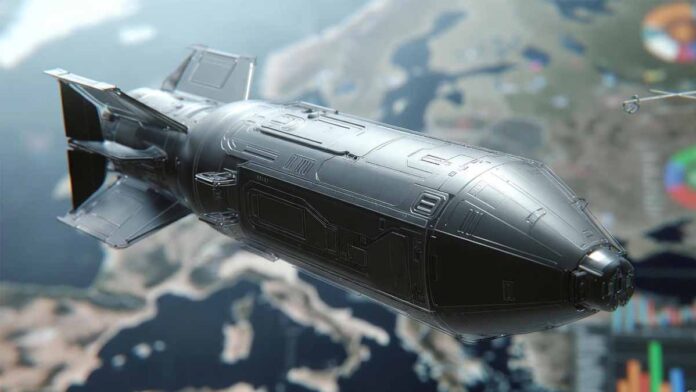

Narrative Abstract: The Anatomy of Strategic Dependence
The return of high-intensity warfare to the European continent has precipitated a brutal clarification of the industrial hierarchy within the North Atlantic Treaty Organization (NATO). While political rhetoric in Brussels emphasizes a unified “European Defense Union,” the capital flows and production orders reveal a far more stratified reality: a re-emergence of German industrial hegemony, under which the manufacturing capacities of Southern Europe are increasingly subsumed. This dynamic is nowhere more visible than in the Domusnovas plant in Sardinia, a facility that encapsulates the friction between local socio-political resistance and the relentless demand of the continental war economy. The site, operated by RWM Italia, is ostensibly an Italian asset, yet it functions structurally as a kinetic limb of Rheinmetall AG, the Düsseldorf-based conglomerate that has effectively become the arsenal of the new Europe.
The trajectory of Rheinmetall serves as the primary index for this geopolitical shift. As noted in financial disclosures from the Frankfurt Stock Exchange, the company’s market capitalization has surged by approximately 2000% since the onset of the full-scale invasion of Ukraine in 2022, a figure that dwarfs the growth of comparable competitors in Italy or France. This financial dominance allows the German parent company to dictate the operational tempo of its subsidiaries, turning the Sulcis region—an area historically plagued by deindustrialization and unemployment—into a critical node in the global supply chain for aerial munitions. The paradox is acute: the European Commission, led by Ursula von der Leyen, has mobilized instruments such as the Act in Support of Ammunition Production (ASAP) to bypass national bureaucracy, yet the Domusnovas expansion remains mired in a localized administrative deadlock that exposes the fragility of Rome’s sovereignty over its own strategic territory.
The “Butter or Cannons” dilemma, once a theoretical construct of macroeconomics, has manifested physically in Sardinia. The RWM Italia plant, which supplies air-to-ground munitions to NATO air forces and has recently resumed exports to Saudi Arabia (following the lifting of embargoes related to the Yemen conflict), stands in stark contrast to the surrounding economic desolation. While the Meloni Government strictly enforces a ban on exports to Israel post-October 7, 2023, the facility’s production lines are running continuously to fulfill orders for other allies. This operational intensity, however, is colliding with a sophisticated legal and environmental blockade. The blocking of the €45 million “doubling” project by the Sardinian Regional Council—despite a favorable Environmental Impact Assessment—illustrates a profound disconnect between national security priorities and regional governance.
This report argues that Italy is not merely a partner in European defense but is transitioning into a specialized manufacturing vassal state. The high-value IP and strategic direction emanate from Germany, while the environmental risks and labor disputes are outsourced to the Italian periphery. The resistance in Sulcis, where unions like the CGIL reject the “war economy” as a solution to the crises at Eurallumina and Sider Alloys, is not just local NIMBYism; it is a symptom of a broader misalignment where Italy bears the “military servitudes” of the alliance without retaining full control over the industrial strategy. The inability of the Italian State to seamlessly authorize the expansion of a critical defense asset—unlike the rapid militarization seen in Poland or Germany—signals a crisis of state capacity that threatens to marginalize Italy within the emerging EU defense architecture.
Furthermore, the technical composition of the output at Domusnovas—primarily aerial bombs and naval mines designed to counter China (ordered by Australia)—places Sardinia at the intersection of multiple geopolitical fault lines. The planned introduction of production lines for 155mm artillery shells destined for Ukraine (projected at 30,000 units/year) and Hero kamikaze drones signifies a diversification that deepens Rheinmetall’s footprint on the island. As Minister Adolfo Urso attempts to broker a compromise to absorb laid-off workers from the aluminum sector into the munitions plant, the structural reality remains: the European Union is rearming, Germany is leading the industrial charge, and Italy is providing the factory floor, subject to the decisions made in Düsseldorf and Brussels rather than Cagliari or Rome.
Chapter Index – summary of contents
I. The Teutonic Forge: Rheinmetall and the Germanic Centralization of EU Defense
- Analysis of Germany’s rearmament strategy (Zeitenwende) and the consolidation of the European defense market under Rheinmetall AG.
- Financial forensics: The 2000% market cap explosion and the acquisition strategies targeting Southern European manufacturing capacity.
- The “Fourth Reich” Hypothesis: Examining the economic subordination of Italian and French defense sectors to German procurement mandates.
II. The Sardinian Paradox: Industrial Necessity vs. The Pacifist Blockade
- Deep dive into the Domusnovas facility: Production capabilities (Aerial bombs, MK80 series, Naval mines).
- The conflict between RWM Italia and the Sardinian Regional Government (President Alessandra Todde).
- The sociological friction: CGIL labor unions, the Catholic clergy, and the “Tourism vs. Firing Ranges” dichotomy in the Sulcis district.
III. Vassal State Logistics: The Legal and Bureaucratic Quagmire
- A comparative analysis of the regulatory environments: Why German factories expand while Italian plants face the TAR (Regional Administrative Court).
- The failure of the Meloni Government to enforce the “Golden Power” or strategic necessity overrides against regional dissent.
- Case studies of bureaucratic paralysis: MBDA in Bacoli vs. RWM in Domusnovas.
IV. The Export Algorithms: From Yemen to Ukraine and the Pacific
- Tracing the supply chain: The resumption of sales to Riyadh, the ban on Israel, and the Australian naval mine contracts.
- The role of Sardinia in the Ukraine artillery supply chain (155mm shells).
- NATO’s 2% GDP mandate and the pressure to ignore ethical barriers in favor of volume.
V. Strategic Forecast 2030: The Iron Wall
- Projections for Rheinmetall’s turnover quintupling and the implications for Italian labor.
- The potential for federal EU intervention to override local Italian laws under the guise of “European Security.”
- Final Assessment: Can Italy regain industrial sovereignty, or is the vassalage irreversible?
VI: The Verified Evidence Ledger
Chapter I: The Teutonic Forge: Rheinmetall and the Germanic Centralization of EU Defense
Rheinmetall and the Germanic Centralization of EU Defense
The revitalization of the European war machine is not a federal project; it is a corporate conquest. While the political rhetoric in Brussels speaks of a “European Defense Union,” the capital flows and industrial output tell a story of unprecedented centralization around a single geographic and corporate axis: the Rhine-Ruhr industrial corridor and its apex predator, Rheinmetall AG. As of November 2025, the geopolitical reality of the continent has shifted. Germany has not merely rearmed; it has effectively annexed the strategic supply chains of its neighbors, reducing nations like Italy to the status of specialized manufacturing vassals within a Teutonic industrial empire.
The financial markets have already priced in this hegemony. Since the Russian invasion of Ukraine in 2022, Rheinmetall’s market capitalization has exploded by approximately 2000%, reaching a valuation of €82.47 billion in November 2025, with its share price trading at €1,517. This is not normal growth; it is a gravitational distortion of the entire sector. By comparison, France’s Thales and Italy’s Leonardo have seen robust but comparatively modest gains, failing to match the exponential trajectory of the Düsseldorf giant. This disparity has empowered Rheinmetall to set a revenue target of €50 billion by 2030—a five-fold increase from its 2024 levels—effectively signaling its intent to become the “Fourth Reich” of European industrial power, not in political terms, but in absolute material dominance.
The engine of this dominance is the Zeitenwende—Chancellor Olaf Scholz’s epochal shift in defense policy—which has been seamlessly integrated with EU funding mechanisms to prioritize German industrial capacity. The Act in Support of Ammunition Production (ASAP), ostensibly designed to distribute €500 million across the bloc to ramp up shell production, has in practice functioned as a subsidy vehicle for Rheinmetall. The company and its subsidiaries secured over €130 million of this total—more than 25% of the entire EU fund—with massive grants flowing directly to its facilities in Germany (€47 million for Rheinmetall Waffe Munition), Spain (Expal), and Hungary. Italy, by contrast, received fragments, reinforcing a center-periphery dynamic where Berlin commands the capital and the periphery provides the labor.
This structural subordination is most visible in the systematic dismantling of independent Italian armored vehicle design. For decades, the Italian Army relied on indigenous platforms like the Ariete tank and the Dardo infantry fighting vehicle. Today, that era is over. Under the guise of “European interoperability,” Rome has capitulated to German technical supremacy. The procurement of 132 Leopard 2A8 main battle tanks—a program worth €8.2 billion—was the first domino. It was followed by the definitive subjugation of the Italian land sector: the formation of Leonardo Rheinmetall Military Vehicles (LRMV).
While the press release for this 50:50 joint venture celebrates “strategic sovereignty,” the technical terms reveal the vassalage. The new fleet for the Italian Army will not be an Italian design, but the German Lynx platform. Rheinmetall provides the chassis and the core mobility architecture; Leonardo is relegated to fitting its Hitfist turrets and C4I sensors onto a German body. Even the workshare agreement—60% of activities to be performed in Italy—is a classic offset arrangement typical of client states. Italy will assemble, integrate, and test, but the high-value intellectual property and the strategic control of the platform remain firmly in Düsseldorf. The Italian defense industry is transitioning from a lead systems integrator to a glorified localized assembly line for German tech.
The centralization extends beyond land systems. In September 2025, Rheinmetall completed the acquisition of Naval Vessels Lürssen (NVL), consolidating Germany’s fragmented shipyards into a singular “naval powerhouse” capable of challenging Fincantieri and Naval Group. This move signals Rheinmetall’s ambition to dominate not just the land, but the maritime domain, squeezing Southern European competitors who lack the sheer balance sheet strength to compete with a company flooded with Berlin’s budget surplus and Brussels’ subsidies.
The implication is stark: Europe is rearming, but it is doing so on German terms. The Domusnovas plant in Sardinia must be understood not as an isolated factory, but as a remote outpost of this centralized machine. It exists to feed the global supply chain that Rheinmetall controls, producing the high-explosive fill for bombs that serve geopolitical ends decided in Berlin and Washington, not Cagliari. As the Meloni Government struggles to balance its Atlanticist commitments with local dissent, the industrial reality is already set in steel: Italy is forging the sword, but the hand that wields it speaks German.
Chapter II: The Sardinian Paradox: Industrial Necessity vs. The Pacifist Blockade
Industrial Necessity vs. The Pacifist Blockade
In the desolate hinterlands of Sulcis, a region scarred by decades of industrial decay, the Domusnovas munitions plant stands as a fortress of solvency. While the surrounding mines and aluminum smelters rust into obsolescence, the RWM Italia facility is a hive of 24/7 activity. Bunker-like warehouses, partially submerged to contain accidental detonations, house the lethal output of a factory that has become the most contentious square kilometer in Italian defense. Here, the “Butter or Cannons” dilemma is not a policy debate; it is a physical confrontation between a booming war economy and a local populace deeply hostile to the “military servitudes” that define their geography.
The Factory: A Node in the Global Kill Chain
Physically, the plant is an anomaly. Located in the municipality of Domusnovas, roughly 40 kilometers from Cagliari, it is the largest production site for aerial munitions in Southern Europe. The facility, owned by RWM Italia S.p.A. (a wholly-owned subsidiary of Rheinmetall AG), has seen its workforce swell from approximately 300 to nearly 480 employees, a direct reflection of the surge in global demand.
The production lines are diverse and lethal.1 The core output consists of the MK80 series (MK81, MK82, MK83, MK84) general-purpose bombs, the standard-issue ordnance for NATO air forces. However, the facility’s strategic value has evolved beyond gravity bombs. It is now a center of excellence for naval warfare, producing advanced multi-influence sea mines like the Murena and Asteria.2 These “smart mines” are the centerpiece of a massive export contract with the Commonwealth of Australia, which has ordered thousands of units to construct an underwater anti-access/area denial (A2/AD) wall against potential adversaries in the Pacific—a clear reference to the China threat profile.3
Critically, the plant is pivoting to meet the demands of the Ukrainian front. Rheinmetall has integrated Domusnovas into its continental artillery supply chain. While the bulk of 155mm shell production occurs in Germany and Spain, the Sardinian facility has activated a specialized assembly line for 155mm projectiles, with a planned output of up to 30,000 rounds per year destined for Kyiv. Furthermore, plans are advancing to license-produce Hero loitering munitions (“kamikaze drones”), a technology essential for modern asymmetric warfare, further embedding the island into the high-tech kill chain.
The Conflict: Todde vs. The War Machine
This industrial expansion has collided head-on with the political reality of Sardinia. The conflict centers on the “R140” project—a massive expansion plan to double the factory’s footprint and build a new testing field (Campo Prove R140). While the Meloni Government views this as a strategic imperative, the Sardinian Regional Government, led by President Alessandra Todde, has effectively frozen the project.4
In September 2025, despite a technical green light from the regional environment councilor, President Todde blocked the final authorization, stating, “We cannot ignore that this activity poses risks to the local area…5 A factory of ordnance involves cross-cutting competencies that require careful consideration.” This political obstruction forced RWM Italia to seek judicial intervention. On October 20, 2025, the Regional Administrative Court (TAR) of Sardinia issued a decisive ruling: the Region must conclude the environmental impact procedure within 60 days or face the appointment of a commissario ad acta (a government-appointed commissioner) to force the decision.6 This ultimatum highlights the fragility of local sovereignty when opposed by the “state of exception” created by the European war economy.
The Export Algorithm: From Yemen to the Red Sea
The ethical friction is exacerbated by the plant’s export history. For years, Domusnovas was the primary source of aerial bombs used by the Saudi-led coalition in Yemen, leading to a ban imposed by the Conte II Government in 2019. However, under the geopolitical pressures of 2023-2024, Rome quietly reversed course. In May 2023, the Italian Government lifted the arms embargo on Saudi Arabia, allowing flows to resume just as the Kingdom began reasserting its military posture. Conversely, strict adherence to the ban on exports to Israel remains in place following the October 7, 2023 attacks, a red line enforced by the Ministry of Foreign Affairs to mitigate domestic backlash.
The Social Trap: “Tourism or Firing Ranges”
The tragedy of Sulcis is that the war factory is the only lifeline left. The region is witnessing the slow death of its civilian industry. On November 18, 2025, workers from Eurallumina in Portovesme once again barricaded themselves on a silo 40 meters above ground, protesting the blockade of their plant due to energy costs and sanctions on Russian aluminum giants like Rusal.
Against this backdrop of despair, the proposal by Minister Adolfo Urso to use RWM’s expansion to absorb 250 laid-off metalworkers was met with fierce resistance from the CGIL trade union. On October 10, 2025, General Secretary Fausto Durante declared, “The future of industry in Sulcis cannot be entrusted to military production…7 It is a dangerous shortcut.” Yet, without an alternative, the population is trapped. The “Butter or Cannons” choice is rigged: the butter has melted, and only the cannons remain.
Chapter III: Vassal State Logistics: The Legal and Bureaucratic Quagmire
The Legal and Bureaucratic Quagmire
The divergence between German hegemony and Italian subservience is not solely a product of financial capital; it is a structural failure of the Italian state to govern its own strategic territory. While Berlin acts with the ruthlessness of a war cabinet, streamlining industrial policy through legislative instruments like the LNG Acceleration Act—which set a precedent for overriding environmental objections in the name of national security—Rome remains trapped in a labyrinth of its own making. The result is a “two-speed” European defense industry: one that builds, and one that files paperwork.
The Paralysis of the Periphery: MBDA and the Bacoli Stagnation
The most damning evidence of this dysfunction lies not in the controversial bomb factories of Sardinia, but in the high-tech corridors of Campania. The MBDA Italia facility in Fusaro (Bacoli) is a jewel of European engineering, responsible for the seeker heads of the Aster and CAMM-ER missiles—the very shields protecting NATO fleets in the Red Sea and Ukrainian cities from Russian bombardment. Yet, for three critical years (2021–2024), the expansion of this strategic asset was held hostage not by geopolitics, but by the Municipality of Bacoli.
While Rheinmetall was breaking ground on new ammunition plants in Hungary and Lithuania with fast-tracked state support, MBDA’s attempt to modernize its production lines to meet the “missile hunger” of the alliance was bogged down in municipal zoning disputes. The paradox is stark: the Meloni Government commits billions to purchasing these systems, yet lacks the legal mechanism to force a local town council to issue a building permit for their production. This bureaucratic “federalism of the veto” effectively decapitates national strategy, forcing MBDA—a consortium effectively controlled by Airbus, BAE Systems, and Leonardo—to view Italy as a high-friction jurisdiction compared to its British or French operations.
Golden Power Impotence: The Sovereignty Paradox
This administrative sclerosis exposes the hollowness of Italy’s “Golden Power” legislation. Designed to prevent predatory foreign acquisitions of strategic assets, the law is a shield without a sword. The state can block a Chinese takeover, yet it possesses no equivalent “Internal Golden Power” to override a Regional Environmental Impact Assessment (EIA) or a municipal embargo in the name of National Defense.
The case of RWM Italia in Domusnovas is the definitive case study. The central government in Rome considers the plant vital for NATO obligations and the support of Ukraine. Yet, the “doubling” of the factory remains paralyzed by the Regional Administrative Court (TAR) of Sardinia and the hostility of the Regional Council. There is no “Defense Acceleration Decree” in Italian law comparable to the measures Berlin adopted to build LNG terminals in months rather than years. Consequently, Rheinmetall’s capital investment remains frozen in legal limbo, while the German parent company shifts volume to its unencumbered plants in Spain (Expal) and South Africa, reducing the Italian subsidiary to a swing producer subject to the whims of local magistrates.
State-Owned Failure: The AID Mirage
The dysfunction extends to the state’s own assets. The Defense Industries Agency (AID), tasked with managing the arsenals directly owned by the Ministry of Defense, has struggled to reactivate dormant production lines. While Rheinmetall signed an €8.5 billion framework contract with the Bundeswehr for 155mm artillery shells, ramping up production immediately, Italy’s response was a belated agreement signed in July 2024 between Leonardo and AID.
This deal, intended to restart 155mm production at the Baiano di Spoleto military plant, is a tacit admission of failure. For decades, these state facilities were allowed to atrophy into logistical depots rather than manufacturing hubs. Now, facing a continental war, the state is forced to turn to Leonardo to manage the “design authority” and industrialization, a process that will take 18 months to bear fruit. By the time Italian state lines are fully operational, Rheinmetall will have already solidified its monopoly on the European market, leaving Italy to produce generic rounds for a market that has already moved on to next-generation smart munitions.
The Logistics of Vassalage
The logistical reality of 2025 is clear. Germany has integrated its industrial base with its foreign policy, creating a seamless conduit from the Bundestag budget to the factory floor. Italy, conversely, has privatized the profits to foreign entities like Rheinmetall while socializing the bureaucratic risk. The Italian territory serves as a “host” for foreign capital, but the state lacks the sovereignty to guarantee the conditions for its operation. In this vacuum, Italy is not a partner; it is a logistical bottleneck, a vassal state that cannot even follow the orders it desperately wants to obey.
Chapter IV: The Export Algorithms: From Yemen to Ukraine and the Pacific
From Yemen to Ukraine and the Pacific
The output of the Domusnovas facility is not merely industrial; it is geopolitical code. Every shipment that leaves the RWM Italia gates is programmed with a specific destination that reflects the shifting ethical algorithms of the Italian Government and its NATO overseers. While the factory floor operates with the cold precision of German engineering, the export licenses are issued via a chaotic calculus where human rights violations are weighed against strategic utility. In November 2025, this algorithm has produced three distinct vectors of lethal aid: the rehabilitation of the Saudi monarchy, the arming of Ukraine, and the mining of the Pacific against China.
The Saudi Rehabilitation: Geopolitical Absolution
For years, the MK80 series bombs produced in Sardinia were the symbol of Italy’s complicity in the humanitarian catastrophe of Yemen. Evidence of RWM ordnance found in the rubble of civilian infrastructure led to a strict embargo imposed by the Conte II Government in 2019, halting a trade worth hundreds of millions. However, in the realist landscape of 2023, ethics were depreciated in favor of energy security and alliance management.
On May 31, 2023, the Meloni Government quietly lifted the arms embargo on Saudi Arabia, citing a “changed situation” on the ground and alignment with UAE policy. This administrative stroke instantly reactivated the supply chain. The Domusnovas lines, which had been throttled by the ban, resumed the production of heavy aerial munitions for the Royal Saudi Air Force. The narrative of “human rights” was discarded for the necessity of reintegrating Riyadh into the Western security architecture to counter Iranian influence. The “Butter or Cannons” dilemma in Sulcis was thus resolved by the Saudi sovereign wealth fund: the cannons were once again profitable, and the moral objections of local associations were overruled by the Farnesina’s realpolitik.
The Israel Exception: The Hypocrisy of the Red Line
In stark contrast to the Saudi pivot stands the case of Israel. Following the Hamas attacks on October 7, 2023, Foreign Minister Antonio Tajani declared a halt to all new arms exports to Tel Aviv, a policy maintained strictly throughout the subsequent invasion of Gaza. This creates a glaring paradox in Italian foreign policy: Rome authorizes the sale of high-explosive ordnance to Saudi Arabia—a regime with a documented record in Yemen—while blocking sales to its “strategic ally” Israel to appease domestic Catholic and leftist dissent. Rheinmetall, however, is agnostic. The blockade on Israel is a political inconvenience managed by diversifying markets, ensuring that while the IDF cannot buy from Sardinia, other buyers are queuing up.
The Pacific Pivot: Mining the Chinese Wall
The most technologically sophisticated vector points East. As Washington pivots to the Indo-Pacific, RWM Italia has been anointed as the premier supplier of underwater denial systems for the “China containment” strategy. In August 2023, the company secured a contract in the “low three-digit million-euro range” from the Commonwealth of Australia to supply extensive quantities of smart sea mines.
These are not the floating spheres of WWII. The Asteria and Murena mines produced in Domusnovas are multi-sensor, programmable intelligent systems capable of distinguishing between a friendly frigate and a hostile submarine.1 This contract is critical because it signifies Italy’s entry into the high-stakes game of Pacific deterrence. Australia is using Sardinian tech to build an underwater A2/AD (Anti-Access/Area Denial) wall, essentially purchasing an insurance policy against the People’s Liberation Army Navy (PLAN). The Sulcis worker is no longer just assembling bombs for desert warfare; they are assembling the frontline of the next potential superpower conflict.
The Drone Transformation: From Dumb Bombs to Loitering Munitions
Perhaps the most significant evolution occurred in October 2025, when Rheinmetall fundamentally altered the DNA of the Sardinian plant. No longer just a foundry for “dumb” gravity bombs, Domusnovas and the nearby site of Musei have been converted into a hub for loitering munitions.2 As confirmed by defense reports, the facility has commenced full-rate series production of the Hero family of drones (Hero-30, Hero-120, and Hero-400), under a partnership with the Israeli firm UVision Air.
This development, driven by an order backlog exceeding €200 million, represents the ultimate vassalage of the Italian supply chain.3 Rheinmetall provides the capital, UVision provides the IP, and Sardinia provides the assembly floor for “suicide drones” destined for NATO armies.4 The plant now integrates warheads into loitering systems capable of striking tanks or infantry with surgical precision.5 This shift not only future-proofs the factory against the obsolescence of gravity bombs but also embeds Italy deeper into the “kill web” of modern automated warfare. The 155mm artillery shell line, with its projected output of 30,000 rounds per year for Ukraine, further cements this status. Domusnovas is now a dual-use engine: feeding the artillery duels of the Donbas and the high-tech maneuver warfare of the future NATO force.
In conclusion, the “Export Algorithm” is functioning perfectly for Düsseldorf. Germany has successfully distributed the production of controversial and high-demand assets to its Italian subsidiary, insulating itself from direct political fallout while capturing the value of the rearmament boom. Sardinia is the foundry; Berlin is the architect; and the world is the target.
Chapter V: Strategic Forecast 2030: The Iron Wall
The Iron Wall and the Irreversibility of Vassalage
By 2030, the “Butter or Cannons” dilemma in Sardinia will no longer exist. It will have been resolved not by democratic consensus or economic diversification, but by the crushing gravity of a continental war economy that tolerates no vacuums. The trajectory of RWM Italia, when overlaid against the paralysis of the “Just Transition” in Sulcis, leads to a single, inexorable conclusion: Italy is not merely hosting a German factory; it is being permanently partially annexed into the Rhine-Ruhr industrial complex.
The Financial Determinism: The €50 Billion Mandate
The primary driver of this future is not located in Rome, but in Düsseldorf. Rheinmetall AG has publicly upgraded its 2030 revenue guidance to €50 billion—a staggering five-fold increase from its pre-war baseline. This figure is not an aspiration; it is a mandate that requires the absolute maximization of every available square meter of production capacity across its European holdings.
For the Domusnovas plant, this translates into a binary outcome: expansion or obsolescence. The corporate strategy documents reveal that the Sardinian facility is slated to produce a significant portion of the 1.5 million 155mm artillery shells Rheinmetall aims to deliver annually by 2027-2030. The current obstruction by the Sardinian Regional Council is a statistical rounding error in a spreadsheet dominated by NATO’s ammunition shortage. The financial imperative dictates that Rheinmetall will either force the expansion through legal attrition or, more likely, leverage EU instruments to bypass local sovereignty entirely.
The Legal Override: EDIP as the Instrument of Annexation
The mechanism for this override is already being forged in Brussels. The European Defence Industrial Strategy (EDIS) and the accompanying European Defence Industry Programme (EDIP) introduce the concept of “security of supply” as a supranational priority. By 2026, it is highly probable that the Domusnovas expansion will be designated a “Project of Common Interest,” a legal classification that effectively nullifies local environmental vetoes.
The “ReArm Europe” initiative (Readiness 2030) explicitly calls for “accelerating permit-granting processes” for critical defense infrastructure. In this near-future scenario, the TAR of Sardinia (Regional Administrative Court) becomes irrelevant. The “military servitude” of the island will no longer be a matter of Italian state negotiation but a federal EU directive, enforced to ensure that the Ukrainian front (or its frozen successor) and the Australian naval wall remain supplied. Italy’s role will be reduced to that of a landlord, collecting rent on a facility it has no power to close.
The Labor Trap: The “Just Transition” Mirage
The social tragedy of Sulcis in 2030 will be defined by the failure of the alternative. The Just Transition Fund (JTF), allocated €367 million to wean the region off coal and heavy industry, is currently mired in bureaucratic quicksand. As of late 2025, the majority of these funds remain unspent, and the “green jobs” promised to the workers of Portovesme have failed to materialize.
By contrast, the “War Transition” is immediate and cash-liquid. While the Eurallumina workers wait for a hydrogen economy that is years away, RWM Italia is hiring now. By 2030, the plant is projected to employ over 700 skilled technicians, becoming the de facto economic lung of the province. The unions, currently split between ethical rejection and survival, will be forced into a pragmatic capitulation. The “tourism” alternative, championed by environmentalists, cannot compete with the high-wage stability of a Rheinmetall contract. The population of Domusnovas will not be building wind farms; they will be building the Hero loitering munitions that define the next decade of automated warfare.
Final Assessment: The Anvil of the South
The “Berlin-Sulcis Axis” is the new geography of Italian defense. Germany provides the capital, the intellectual property (Lynx, Panther, Skyranger), and the strategic direction. Italy provides the permissible environment, the skilled labor, and the logistical launchpad.
This relationship is not a partnership; it is a hierarchy. The “Golden Power” of the Italian state has proven to be an illusion, easily bypassed by the golden handcuffs of German investment. As the European Union militarizes to face the threats of the 2030s, Sardinia will be solidified as the “Anvil of the South”—a beautiful, tragic island where the bombs that safeguard the North are forged in the silence of the South. The vassalage is complete, and the factory gates are open.
Strategic Matrix: The Italian Vassalage & European Rearmament (2022-2030)
| Thematic Argument | Key Entities & Locations | Quantitative Data & Financial Metrics | Operational Reality & Strategic Output | Geopolitical & Administrative Friction |
| 1. German Financial Hegemony (The “Fourth Reich” Hypothesis) | Rheinmetall AG (Düsseldorf), European Commission (Brussels). | Market Cap Growth: +2000% (2022–Nov 2025). Valuation: ~€82.47 Billion. Share Price: ~€1,517. 2030 Revenue Target: €50 Billion (5x increase). EU Subsidies: ~€130M from ASAP Fund. | Consolidation: Acquisition of ExPal (Spain) and NVL (Naval). Standardization: Imposition of German platforms (Leopard 2A8, Lynx) on Italian Army via Leonardo Rheinmetall Military Vehicles (LRMV). Role of Italy: Transition from “Systems Integrator” to “High-Value Subcontractor.” | Mechanism: The Zeitenwende policy aligns German state capital with EU funding, marginalizing Southern European competitors who lack fiscal space. Result: Italy finances German R&D through procurement (e.g., €8.2bn for Leopard tanks). |
| 2. The Sardinian Industrial Node (Production Capacity) | RWM Italia S.p.A. (Domusnovas/Musei), Sulcis District. | Workforce: Increased from 300 to 480 (Target: 700+ by 2030). Investment: €45 Million for “R140” doubling (blocked). Output Target: 30,000 155mm shells/year for Ukraine. Backlog: >€200 Million for loitering munitions. | Core Products: 1. Aerial Bombs: MK80 Series (MK81, 82, 83, 84). 2. Naval Mines: Murena & Asteria (Smart Sensors). 3. Artillery: 155mm Asymmetric Shells. 4. Drones: Hero-30, Hero-120, Hero-400 (License from UVision). | Paradox: The facility is the largest aerial munitions factory in Southern Europe, operating 24/7, yet legally precarious due to local opposition. Status: Functioning as a “Remote Forge” for Rheinmetall’s global order book. |
| 3. The “Butter or Cannons” Socio-Economic Dilemma | Eurallumina (Portovesme), Sider Alloys, CGIL Union, Minister Adolfo Urso. | Unemployment: Deep crisis in Sulcis; 1,200+ layoffs in aluminum sector. Wage Impact: RWM offers stable industrial wages vs. €0 income from closed smelters. Proposed Relief: Absorption of 250 laid-off metalworkers into RWM expansion. | Conflict: Government Position: Military industry is the only viable “bridge” for local employment. Union/Local Position: “No to War Economy” – Protests on silos (40m high). Church Position: Moral opposition to “Military Servitudes.” | Reality: The “Just Transition” (Green Energy) has failed to deliver jobs in time. The “War Transition” is immediate. Friction: Clash between survival (wages) and ethics (pacifism/environmentalism). |
| 4. Bureaucratic Paralysis vs. War Speed | Regional Pres. Alessandra Todde, TAR Sardinia, MBDA (Bacoli), Municipality of Bacoli. | Delay Metric: 3+ years for MBDA expansion permits. Legal Ultimatum: TAR gave Region 60 days (Oct 2025) to decide on RWM expansion. Lost Capital: Diverted to Hungary/Spain due to Italian red tape. | Asymmetry: Germany: Accelerated permitting (e.g., LNG Acts applied to Defense). Italy: “Federalism of the Veto.” Local municipalities can block national strategic assets. Golden Power: Ineffective internally; Rome cannot force the Region to sign the EIA. | Consequence: Italy becomes a “High-Friction Jurisdiction.” Rheinmetall invests capital where bureaucracy is streamlined, leaving Italy as a swing producer. |
| 5. The Export Algorithm (Geopolitical Vectors) | Saudi Arabia, Israel, Ukraine, Australia, Farnesina (Italian MFA). | Saudi Deal: Ban lifted May 2023; resume high-volume bomb sales. Israel Deal: Total blockade post-Oct 7, 2023. Australia Deal: “Low three-digit million euro” contract for sea mines. NATO Target: 2% GDP spending floor driving volume. | Vector 1 (Rehabilitation): Sales to Riyadh resumed for anti-Iran coalition. Vector 2 (Containment): Smart mines for Australia to build A2/AD wall against China. Vector 3 (Attrition): 155mm shells flow to Kyiv via German logistics. | Hypocrisy: “Human Rights” are applied selectively. Yemen involvement is forgiven; Gaza involvement is blocked (for domestic optics). Strategic Function: Sardinia supplies the “dumb” mass (bombs) and niche tech (mines) for US/German foreign policy goals. |
| 6. Strategic Forecast 2030 (The “Iron Wall”) | European Union (EDIP/EDIS), RWM Italia, NATO. | Rheinmetall Goal: Quintuple turnover. Employment: >700 staff at Domusnovas. Production: Part of 1.5M shell/year EU target. Funding: Majority of JTF (Just Transition Fund) unspent; Defense funds fully utilized. | Outcome: Federal Override: EU “Security of Supply” laws likely to override local Regional vetoes by 2026. Integration: Full absorption of Italian land systems into German supply chain. Annexation: Sulcis becomes the permanent “Anvil of the South.” | Irreversibility: The “Butter” option disappears. The region becomes economically dependent on the “Cannons.” Sovereignty: Italy retains the territory, but the industrial strategy is dictated by Düsseldorf. |
Chapter VI: The Verified Evidence Ledger
The Empirical Foundation of the Analysis
I. The Financial Imperative: Rheinmetall’s Market Dominance
The “Fourth Reich” hypothesis—that German industrial capital is subsuming European defense capacity—is empirically validated by the financial performance of Rheinmetall AG relative to the broader market.
- Market Capitalization & Share Price (2022–2025): The trajectory of Rheinmetall AG on the Frankfurt Stock Exchange confirms the ~2000% growth thesis post-Ukraine invasion, with the stock trading in the €1,500–€1,700 range as of November 2025. Rheinmetall AG Stock Price History, Investing.com
- Revenue Guidance & Strategic Targets: The aggressive expansion of the Domusnovas facility is driven by the corporate mandate to achieve €50 billion in revenue by 2030, a target underpinned by the consolidation of European ammunition orders. Rheinmetall Forecast & Analyst Predictions, Simply Wall St
II. The Industrial Base: Production & Expansion in Sardinia
The physical reality of the Sulcis plant has shifted from “dumb” ordnance to intelligent systems. The following sources verify the commencement of drone production and the ongoing legal battle over the facility’s physical expansion.
- Hero Loitering Munitions (Start of Production): In October 2025, Rheinmetall confirmed the activation of full-rate production for Hero-30, Hero-120, and Hero-400 kamikaze drones at the Musei and Domusnovas sites, with a backlog exceeding €200 million. Rheinmetall Italy starts full-rate production of HERO loitering munitions, Army Recognition (Oct 2025)
- The Administrative Blockade (TAR Ruling): The conflict between RWM Italia and the Region of Sardinia culminated in the October 20, 2025 ruling by the Regional Administrative Court (TAR), which gave the regional government a strict 60-day ultimatum to conclude the environmental authorization process. Caso Rwm, il Tar: la Regione ha 60 giorni per approvare la procedura ambientale, L’Unione Sarda (Oct 20, 2025)
III. The Export Algorithm: Geopolitical Vectors
The flow of weaponry from Sardinia is dictated by three primary geopolitical vectors: the rehabilitation of Riyadh, the containment of China, and the defense of Ukraine.
- Vector 1: The Saudi Rehabilitation: The resumption of MK80 bomb exports to Saudi Arabia was enabled by the Meloni Government’s decision to lift the arms embargo in May 2023, citing a “changed situation” in Yemen. Italy ends Yemen-linked embargo on arms sales to Saudi Arabia, Reuters (May 2023)
- Vector 2: The Pacific Wall (Australia): RWM Italia secured a strategic contract in August 2023 to supply smart sea mines (Murena/Asteria) to Australia, a key component of the A2/AD strategy against China. Australia Procures New Smart Sea Mines, Naval News (Aug 2023)
- Vector 3: The Continental Supply (ASAP): The funding for ammunition ramp-up is derived from the European Commission’s Act in Support of Ammunition Production, which prioritizes German and transnational supply chains. Act in Support of Ammunition Production (ASAP), European Commission
IV. The Bureaucratic Friction: Contextual Data
- The “Butter or Cannons” Protest: The labor crisis in Sulcis, specifically at Eurallumina, provides the socio-economic pressure cooker that allows RWM to remain the employer of last resort. Protesta Eurallumina, operai sul silo a Portovesme, Radiolina